
If this is your first July 4th with a newborn, the question on every Kansas City parent’s mind is the same: how loud is too loud, and how do you protect a tiny baby’s sleep and ears when fireworks start at sundown and run until midnight? Newborn hearing is far more sensitive than adult hearing, and the typical neighborhood fireworks display can hit 140 to 175 decibels at close range, well above the level that NIOSH and the CDC identify as harmful to infant ears. Fireworks and newborns can coexist safely, but it takes a small amount of planning. At Kansas City Newborn Care, we have walked many local families through their first July 4th, and the families who plan ahead almost always have a calm, sleepful holiday. Here is exactly how to do it.
Why Fireworks Are a Concern for Newborns
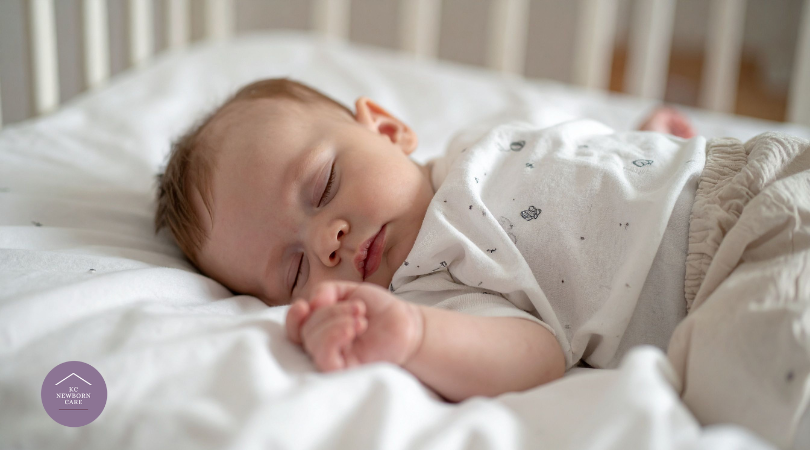
Two things make July 4th uniquely difficult for newborns. First, the noise. Backyard fireworks routinely exceed safe noise exposure thresholds for infants, and unlike adults, babies cannot voluntarily plug their ears or move away. Sustained or sudden loud sounds can briefly elevate cortisol, fragment sleep, and in rare cases damage the delicate structures of the inner ear.
Second, the schedule disruption. Fireworks in most Kansas City neighborhoods start around dusk, exactly when newborns are typically winding down for their longest sleep of the day. Excitement, late-evening visitors, family gatherings, and sensory overload from the holiday itself can stretch the bedtime wake window past your baby’s limit, and an overtired baby on July 4th is not the gift any parent wants. The good news is that with a few intentional choices, you can absolutely have a peaceful, well-rested baby through the entire holiday.
7 Ways to Protect Your Newborn’s Sleep and Ears on July 4th
1. Pick the Quietest Sleep Space in Your Home
The single most effective change you can make is moving your baby’s sleep space, just for that one night, to the most interior room of your home. An interior bedroom or hallway with closed doors significantly reduces the perceived volume of outdoor fireworks. Avoid rooms that share an exterior wall with your driveway, deck, or the neighbor’s yard. Many Kansas City homes have a basement or finished walk-out lower level that works perfectly as a one-night sleep space.
2. Use a Loud, Continuous White Noise Machine
White noise is your single most useful tool. The American Academy of Pediatrics suggests keeping infant white noise machines below 50 decibels at the baby’s ear, but on a fireworks night, you want the white noise loud enough to mask sudden booms without exceeding safe levels. Place the machine across the room rather than near the bassinet, and choose a continuous sound (rain, brown noise, or a steady fan-like tone) rather than nature sounds with intermittent peaks. The continuous wash effectively softens the sharp edges of fireworks.
3. Get Bedtime in Before the Fireworks Start
If your baby normally goes down at 7:30 p.m. and Kansas City fireworks start around 9:00 p.m., aim to have your baby asleep by 8:30 at the latest. A baby who is already in a deep first-cycle of sleep will sleep through significantly more noise than a baby who is just drifting off. If your baby is younger than three or four months, you may even consider a slightly earlier bedtime that day to give them a head start.
For more on age-appropriate bedtime windows, see our guide to newborn wake windows, which is foundational for a peaceful holiday evening.
4. Skip the Late Outing if You Can
Tempting as it is to take your newborn to a public fireworks display so the whole family can be together, the noise levels at most public shows are too high for infant ears even at distance, and the late hour disrupts sleep significantly. If you must attend, stay at the very back of the crowd, use infant-rated noise-protection earmuffs (more on these below), and plan to leave before the finale. For most families, watching from a yard or window with a sleeping baby beats public attendance during the newborn months.
5. Use Infant Noise-Protection Earmuffs (When Needed)
If you will be near loud fireworks, infant-sized noise-protection earmuffs (Noise Reduction Rating 22 or higher, designed specifically for ages 0+ to 24 months) are a worthwhile purchase. Fit matters more than brand. Earmuffs that do not seal around the entire ear do not protect effectively. Practice fitting them at home before the holiday, and never use adult earmuffs, foam earplugs, or cotton balls, which can be hazardous for infants.
6. Plan for Pet Reactions Too
If you have a dog or cat that reacts to fireworks, that reaction can also wake your newborn. Sedate, distract, or relocate anxious pets in advance. Many Kansas City vets recommend talking to your pet’s regular provider weeks in advance if your animal has historically struggled with fireworks. A calm pet protects a calm baby.
7. Have a Plan for Wake-Ups
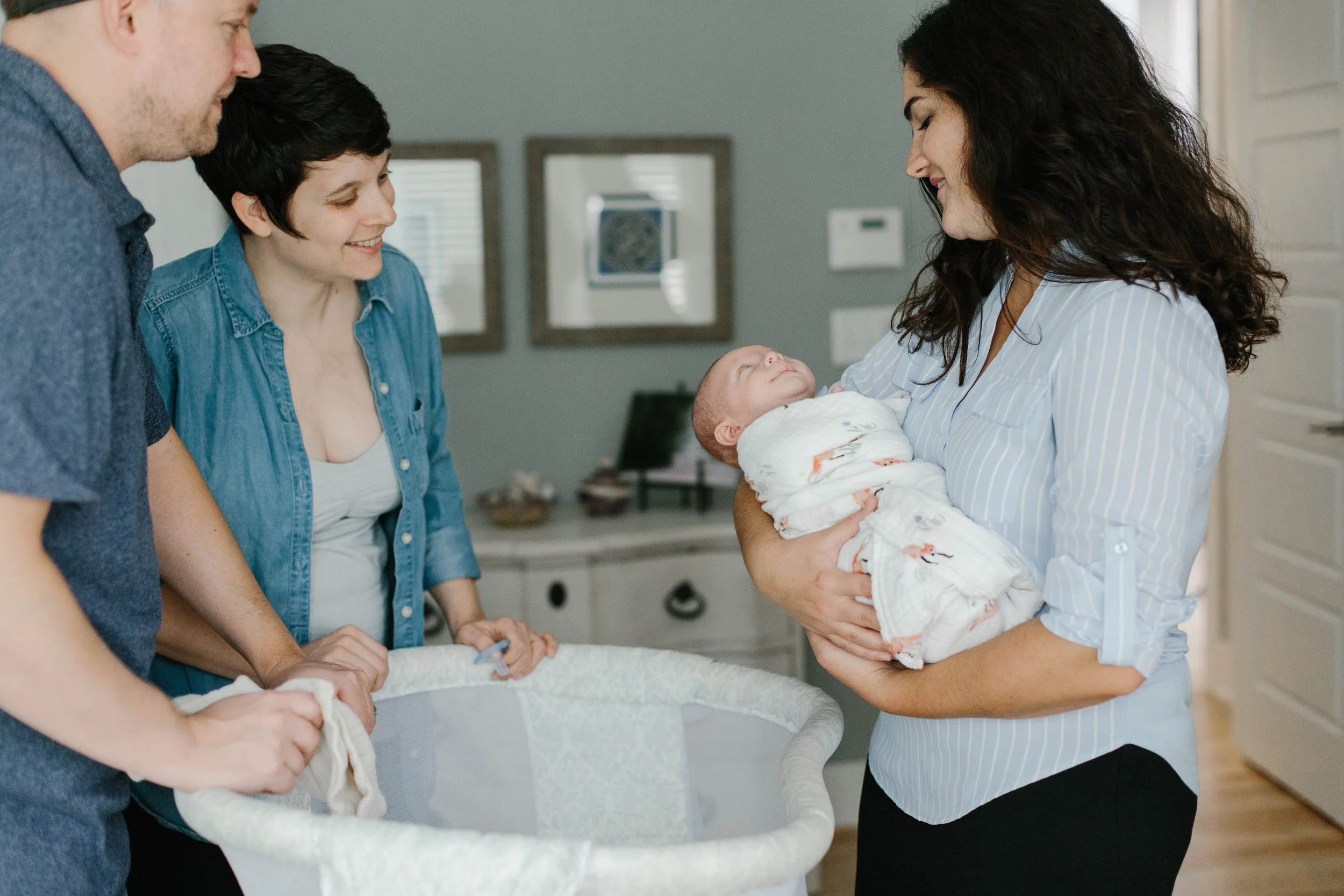
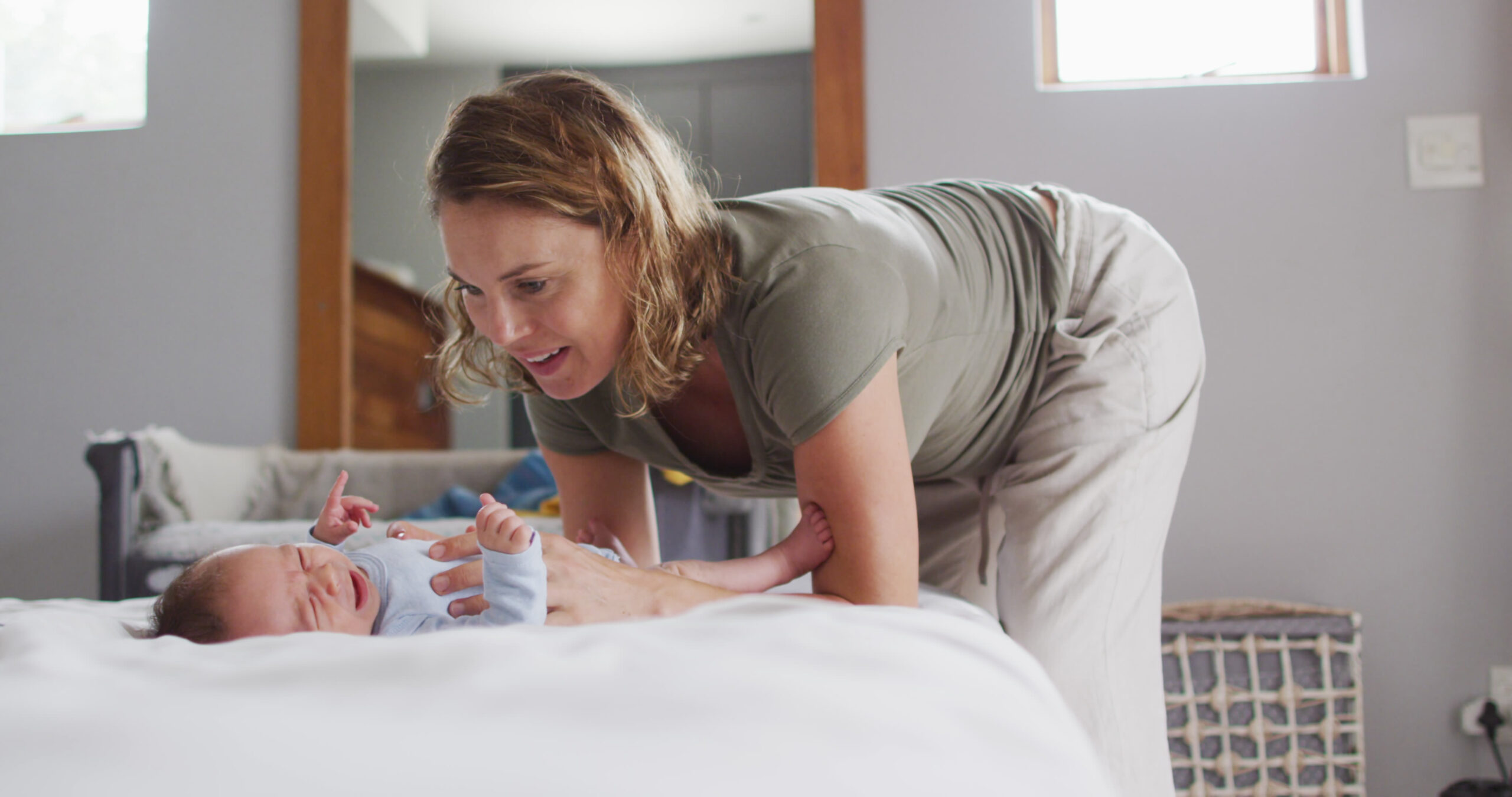
Even with great planning, your baby may wake during the loudest stretch. Plan in advance who is on duty, what you will do (a calm, low-light feed and gentle resettling, not a full social interaction), and how to keep the response quiet. Avoid bright lights, animated voices, or moving the baby around the house. If you have overnight newborn care scheduled that night, your specialist will handle wake-ups calmly while you and your partner enjoy the evening.
A Sample July 4th Schedule for Newborns
For Kansas City families, here is a sample July 4th schedule that has worked well for many of the newborns we have supported. Use it as a starting point and adjust to your baby’s age and rhythm.
Late afternoon (3:00–5:00 p.m.): If you are attending a daytime BBQ or family gathering, plan to be home by 5:00 p.m. to begin the wind-down. Outdoor heat plus over-stimulation is a fast track to a fussy evening.
5:30 p.m.: Quiet feeding, brief tummy time, and a normal bath if your baby enjoys baths.
6:30 p.m.: Begin a calm, low-stimulation evening routine. Dim the lights, lower household noise, and keep visitors to a minimum.
7:30–8:00 p.m.: Final feeding, swaddle (if age-appropriate), and bedtime in the chosen interior sleep space. White noise on, a few minutes before fireworks typically begin.
9:00 p.m.–midnight: Fireworks period. Keep household noise down, lights low, and respond to wake-ups quietly. If you and your partner want to watch fireworks from outside, alternate so one of you is always near the baby. If overnight care is scheduled, this is when your specialist takes over.
Early morning (July 5th): Expect a slightly later wake-up or a fussy morning. Adjust the next day’s first wake window slightly shorter to make up for any disrupted overnight sleep.
Common July 4th Mistakes With Newborns
The Kansas City families who struggle most on July 4th tend to make a few avoidable choices. Watch out for these.
Letting the baby “stay up” to see the fireworks. Newborns do not enjoy fireworks. They tolerate them. Their small visual systems are not yet wired to appreciate distant bright lights, and the late bedtime almost always produces a worse next day. Save the family fireworks tradition for later years.
Hosting a large gathering with the baby in the middle. Even one extra-stimulating afternoon can throw off three days of sleep. If you must host, set up a quiet room where you can retreat with the baby, and limit holding-around the room.
Skipping the white noise machine. Even babies who normally sleep without white noise will benefit from it on July 4th. Borrow one if you do not own one.
Forgetting that the next several nights may also be loud. Many Kansas City neighborhoods have residual fireworks from July 2nd through July 7th. Plan accordingly, not just for the holiday itself.
How a Postpartum Doula Helps on July 4th
If you would like to enjoy a quiet evening with your partner, attend a family gathering without the fireworks worry, or simply protect a particularly sensitive baby during the loudest hours, scheduling overnight newborn care on July 4th is a small choice with a big payoff. Our specialists arrive in the evening, settle your baby into a calm interior sleep space, manage all wake-ups, and protect the long sleep stretch that fireworks would otherwise disrupt. You wake up to a rested baby, a rested you, and a holiday that feels enjoyable rather than exhausting.
Our daytime support team can also help on the afternoon of July 4th by holding the baby during a family BBQ, getting bedtime locked in early, or simply giving you and your partner a few quiet hours before the festivities begin. Both options book quickly for July 4th, so we recommend reaching out at least two weeks in advance.
Frequently Asked Questions About Newborns and Fireworks
Are fireworks dangerous for newborn ears?
Close-range fireworks can produce decibel levels above what is considered safe for infant ears. Distance, sound-dampening (interior rooms, white noise), and the use of infant noise-protection earmuffs when near loud fireworks all dramatically reduce the risk. Routine neighborhood fireworks heard from inside a closed home with white noise running are generally not a hearing-damage concern.
Should I keep my newborn awake to “expose” them to fireworks?
No. There is no developmental benefit to fireworks exposure for a newborn, and the cost (lost sleep, overstimulation, possible ear stress) outweighs any “experience” they would not yet remember. Save the fireworks tradition for toddler or preschool years, and protect the holiday sleep stretch in the meantime.
What if my baby is already sleep-trained but the fireworks wake them?
One night of disrupted sleep does not undo sleep training. Respond gently and quietly, resettle as you normally would, and resume your usual routine the next day. Most babies are right back to baseline within 24 to 48 hours.
Are noise-protection earmuffs safe for infants?
Properly sized infant earmuffs (rated for 0-24 months, with an NRR of 22 or higher) are widely considered safe and effective when used correctly. They should fit snugly without compressing the head, and should only be used during the loud event, not for sleeping.
My newborn slept through last year’s fireworks. Will they this year?
Maybe. Younger newborns (especially under three months) sometimes sleep through significantly more noise than older babies, whose more mature nervous systems pick up on disruptions. Plan as if they will wake even if last year was uneventful.
Have a Calm, Connected July 4th
July 4th does not have to be the night that wrecks the whole week. With a quieter interior sleep space, loud continuous white noise, an early bedtime, and a calm response plan, your newborn can sleep through the loudest hours and you can enjoy the holiday too.
If you would like an experienced newborn care specialist in your home for the holiday so you can fully relax, our team is available across the Kansas City metro. Visit our why-us page to learn how our approach is different, see flexible options on our pricing page, or jump straight to scheduling a free consultation. Bookings for July 4th fill quickly, so the earlier you reach out, the better.
Want a peaceful July 4th with your newborn? Contact Kansas City Newborn Care today and let our team help you protect sleep, protect ears, and protect the holiday spirit.